Anúncios
The moon has fascinated humanity for millennia, and today you can explore its mysteries from the comfort of your own home through innovative online platforms and apps.
Understanding lunar phases has never been more accessible. Whether you’re an astronomy enthusiast, a gardener planning by moonlight, or simply curious about Earth’s celestial companion, digital tools now offer comprehensive resources to track and learn about moon phases in real-time.
These online platforms provide accurate predictions, detailed explanations, and visual representations that transform complex astronomical data into digestible information. Let’s explore how you can master lunar knowledge through modern technology.
🌙 Understanding the Eight Primary Moon Phases
The lunar cycle consists of eight distinct phases that repeat approximately every 29.5 days. Each phase represents a specific position of the moon relative to Earth and the sun, creating the familiar patterns we observe in our night sky.
The New Moon marks the beginning of the cycle when the moon sits between Earth and the sun, making it invisible from our perspective. This phase represents new beginnings and is traditionally associated with setting intentions.
As the moon moves in its orbit, we observe the Waxing Crescent, where a sliver of light appears on the right side (in the Northern Hemisphere). This phase lasts about 3-4 days and shows the moon “growing” as more sunlight becomes visible.
The First Quarter occurs when exactly half of the moon’s visible surface is illuminated. Despite being called a “quarter,” this refers to the moon being one-quarter of the way through its monthly cycle, not the amount of surface we can see.
During the Waxing Gibbous phase, more than half but not all of the moon is visible. The word “gibbous” comes from Latin, meaning humpbacked, describing the moon’s swollen appearance.
The Full Moon represents peak illumination when Earth sits between the sun and moon. This phase has inspired countless myths, traditions, and cultural celebrations across civilizations. Each month’s full moon often carries a specific name based on seasonal characteristics.
Following the full moon, the Waning Gibbous begins the decreasing phase. More than half remains visible, but the illuminated portion shrinks daily. This phase is associated with reflection and gratitude in various spiritual traditions.
The Last Quarter shows the opposite half illuminated compared to the First Quarter. The moon has now completed three-quarters of its cycle and heads toward darkness again.
Finally, the Waning Crescent displays a thin sliver on the left side (Northern Hemisphere) before the cycle renews with another New Moon. This phase represents completion and release.
Why Phase Timing Varies Slightly Each Month
The lunar cycle doesn’t fit neatly into calendar months. The average cycle lasts 29.53 days, which means full moons and new moons shift dates throughout the year. This variation occurs because the moon’s orbit around Earth isn’t perfectly circular—it’s elliptical.
When the moon is closest to Earth (perigee), it moves faster; when farthest (apogee), it moves slower. This creates fluctuations of several hours in phase timing, which advanced online calculators account for with remarkable precision.
📱 Digital Tools That Bring Lunar Learning to Life
Modern technology has transformed how we study and interact with lunar information. Specialized applications deliver real-time phase data, historical patterns, and future predictions directly to your smartphone or computer.
These platforms typically offer several key features: current phase displays showing exactly what the moon looks like right now, phase calendars mapping out the entire month or year, and moonrise and moonset times customized to your geographic location.
Many applications include augmented reality features that let you point your device at the sky to identify the moon’s position and phase. This interactive element makes learning engaging, especially for younger astronomy enthusiasts.
Notification systems alert you to upcoming full moons, new moons, or other significant lunar events you want to track. Gardeners often set reminders for specific planting phases, while photographers get alerts for optimal moon photography opportunities.
Educational Content Built Into Modern Apps
Beyond simple phase tracking, comprehensive lunar apps include educational resources explaining the science behind what you’re observing. These might include video tutorials, interactive diagrams showing orbital mechanics, and detailed articles about lunar phenomena.
Some platforms feature quizzes and challenges to test your knowledge, turning learning into an engaging game. You might be asked to identify phases from images, predict the next full moon date, or explain why we always see the same face of the moon.
🌍 How Your Location Affects What You See
Your geographic position dramatically influences your lunar observations. The moon appears different depending on whether you’re viewing from the Northern or Southern Hemisphere, and your latitude affects visibility patterns throughout the year.
In the Northern Hemisphere, the waxing moon (new to full) illuminates from right to left. The phrase “DOC” helps remember this: D-shape during waxing (first quarter), O-shape at full, C-shape during waning (last quarter).
In the Southern Hemisphere, this reverses—the waxing moon illuminates left to right. The mnemonic becomes “COD” instead. Near the equator, the crescent can appear to sit on its “bottom,” creating what’s called a “wet moon” or “Cheshire moon.”
Online lunar tools account for these differences automatically. When you input your location, the app adjusts all visual representations and predictions to match exactly what you’ll observe from your specific latitude and longitude.
Time Zone Considerations for Phase Transitions
Exact phase moments (like the precise instant of a full moon) occur at a specific universal time. However, your local time zone determines when you’ll experience this event on your clock. A full moon might technically peak at 3:14 AM in New York but 12:14 AM in Los Angeles.
Quality lunar applications handle these conversions seamlessly, displaying all times in your local zone while maintaining astronomical accuracy. This matters particularly for activities like eclipse viewing or special lunar observations tied to exact phase timing.
🌱 Practical Applications Beyond Astronomy
Learning about moon phases extends far beyond academic interest. Numerous practical activities and traditions connect to lunar timing, making this knowledge genuinely useful in daily life.
Gardening by the moon represents one of the most widespread applications. This practice, dating back thousands of years, suggests planting different crops during specific lunar phases. Above-ground crops are traditionally planted during the waxing moon when gravitational pull encourages upward growth, while root vegetables go in during the waning moon.
While scientific evidence for lunar gardening remains debated, millions of gardeners worldwide follow these principles and report positive results. Modern apps often include gardening calendars specifically designed around optimal planting times.
Fishing enthusiasts track lunar phases because fish feeding patterns often correlate with moon activity. The days surrounding new and full moons—when tidal forces are strongest—frequently produce the best catches, particularly for saltwater species.
Wildlife observation benefits from lunar knowledge too. Many animals alter their behavior based on moonlight availability. Nocturnal creatures are often more active during darker phases, while some species deliberately time breeding or migration to lunar cycles.
Photography and the Perfect Moon Shot
Lunar photography represents an accessible entry point into astrophotography. Unlike deep-sky objects requiring specialized equipment, you can capture stunning moon images with standard cameras or even smartphones.
The Waxing or Waning Gibbous phases often produce the most dramatic photographs because shadows cast by lunar craters and mountains create visible texture and depth. Full moons, while impressive to the eye, can appear flat in photographs due to the absence of shadows.
Planning apps help photographers determine moonrise locations, elevation angles, and timing for incorporating the moon into landscape compositions. The “supermoon” phenomenon—when a full moon coincides with perigee—creates opportunities for impressively large lunar images.
🔭 The Science Behind Online Lunar Calculations
You might wonder how these apps predict moon phases with such precision, sometimes decades into the future. The answer lies in centuries of astronomical observation and mathematical modeling.
Lunar motion follows predictable patterns governed by gravitational interactions between Earth, the moon, and the sun. Scientists have refined these calculations to extraordinary accuracy using data from lunar missions, laser ranging experiments, and continuous observation.
The primary calculation involves the synodic month—the 29.53-day period from new moon to new moon. This differs from the sidereal month (27.32 days), which measures the time for the moon to orbit Earth relative to distant stars. The difference occurs because Earth moves around the sun during the moon’s orbit.
Modern algorithms also account for:
- Orbital eccentricity – The moon’s elliptical path creates varying speeds
- Axial precession – The moon’s orbit slowly rotates over 18.6 years
- Perturbations – Subtle gravitational influences from other planets
- Tidal acceleration – The moon slowly drifts away from Earth at about 3.8 cm per year
Historical Methods vs. Digital Precision
Ancient cultures developed impressive lunar calendars without modern technology. The Babylonians could predict lunar eclipses, while many civilizations created calendars based on lunar months. These systems relied on careful observation and pattern recognition across generations.
Today’s digital tools achieve precision those ancient astronomers would find magical. Apps can tell you the moon’s phase not just to the day, but to the minute, for any location on Earth, for dates thousands of years into the past or future.
🌗 Special Lunar Phenomena to Track Online
Beyond regular phases, several special lunar events create exceptional viewing opportunities and learning moments. Online platforms help you never miss these rare occurrences.
Supermoons happen when a full moon coincides with the moon’s closest approach to Earth. The moon can appear up to 14% larger and 30% brighter than when at its farthest point. Typically, 2-4 supermoons occur each year.
Blue moons refer to the second full moon within a single calendar month, occurring roughly every 2.7 years. The phrase “once in a blue moon” originated from this rarity. Some definitions instead use the third full moon in a season with four full moons.
Lunar eclipses occur when Earth’s shadow falls across the moon during a full moon phase. The moon can turn dramatic shades of red or orange due to sunlight refracted through Earth’s atmosphere—a phenomenon called a “blood moon.”
Lunar occultations happen when the moon passes in front of stars or planets from our perspective. These events offer fascinating viewing opportunities, especially when bright planets like Venus or Jupiter are occulted.
Setting Up Alerts for Celestial Events
Most comprehensive lunar apps allow you to customize notifications for events that interest you. You might want alerts for every full moon, or only for special events like supermoons and eclipses.
Advanced users often set reminders several days before major events to plan photography sessions or observing trips. Weather-integrated apps can even warn you if clouds might obstruct viewing in your area.
📊 Comparing Online Learning Resources
Not all lunar learning platforms offer the same features or quality. Understanding what distinguishes excellent resources helps you choose the right tools for your needs.
| Feature | Basic Apps | Comprehensive Platforms |
|---|---|---|
| Current phase display | ✓ | ✓ |
| Monthly calendar | ✓ | ✓ |
| Location-specific times | Sometimes | ✓ |
| Educational content | Limited | Extensive |
| Augmented reality | Rare | Common |
| Historical data | ✗ | ✓ |
| Eclipse predictions | ✗ | ✓ |
| Customizable notifications | Basic | Advanced |
When evaluating platforms, consider your primary purpose. Casual observers might find basic apps perfectly adequate, while serious astronomy students or photographers benefit from advanced features like precise timing, augmented reality positioning, and integration with telescope controls.
🎓 Building Your Lunar Knowledge Systematically
Approaching lunar learning with a structured plan accelerates your understanding and retention. Rather than randomly absorbing facts, follow a progression that builds on previous knowledge.
Week 1: Master the basics – Focus on identifying the eight primary phases. Use your app daily to check the current phase and familiarize yourself with how it appears in the sky. Try to spot the moon each evening and match what you see with the app’s display.
Week 2: Understand the mechanics – Learn why phases occur by studying the Earth-moon-sun geometry. Interactive diagrams in quality apps make this clear. Understand that phases result from our viewing angle, not Earth’s shadow (except during lunar eclipses).
Week 3: Track timing patterns – Notice how the moon rises and sets approximately 50 minutes later each day. Observe how the moon’s position in the sky changes throughout the month. Document moonrise times for a full cycle.
Week 4: Explore special phenomena – Research upcoming supermoons, blue moons, or eclipses. Learn what makes these events special and plan to observe the next occurrence in your area.
Engaging Family and Friends in Lunar Learning
Lunar observation makes an excellent shared activity. Children find the moon especially fascinating, and tracking its changes creates opportunities for regular family engagement with science.
Create a household “moon journal” where everyone records observations and predictions. Challenge family members to guess what phase will appear each evening before checking the app. Celebrate special lunar events with viewing parties complete with telescopes or binoculars.
🌐 Cultural Perspectives on Lunar Phases
Different cultures throughout history have developed rich traditions and meanings associated with moon phases. Exploring these perspectives adds depth to your technical understanding and connects you to humanity’s long relationship with our celestial companion.
Chinese culture recognizes the Mid-Autumn Festival on the 15th day of the eighth lunar month, celebrating the harvest moon. Families gather to appreciate the full moon, share mooncakes, and express gratitude for abundance.
Islamic tradition bases the entire calendar on lunar months, with each month beginning when the first crescent becomes visible after the new moon. The timing of Ramadan and other important observances depends on accurate moon sighting.
Many Indigenous American traditions assign names to each month’s full moon—Harvest Moon, Hunter’s Moon, Snow Moon—reflecting seasonal activities and natural phenomena. These names vary by region and tribe, offering insights into different environments and lifestyles.
Hindu festivals align with specific lunar days (tithis). Diwali falls on the new moon, while Holi occurs near the full moon. The lunar calendar (panchang) remains central to determining auspicious times for various activities.
✨ Advanced Features Worth Exploring
Once you’ve mastered basic lunar tracking, several advanced features can deepen your engagement and knowledge.
Lunar libration refers to the slight wobbling motion that allows us to see approximately 59% of the moon’s surface over time, despite tidal locking. Advanced apps can show which “extra” regions are visible on particular dates, helping you observe features normally hidden from view.
Terminator tracking focuses on the line dividing illuminated and dark portions of the moon. The most dramatic lunar surface features appear along this boundary where long shadows reveal texture. Apps can identify which craters and mountains offer the best viewing on any given date.
Integration with weather data helps you plan observations by predicting cloud cover and atmospheric conditions. Some platforms even estimate seeing conditions—atmospheric stability that affects image clarity—particularly valuable for astrophotographers.
Multi-year patterns reveal interesting cycles like the 18.6-year lunar standstill, when the moon reaches its most extreme northern and southern points. Tracking these longer patterns connects you to astronomical rhythms spanning beyond monthly cycles.
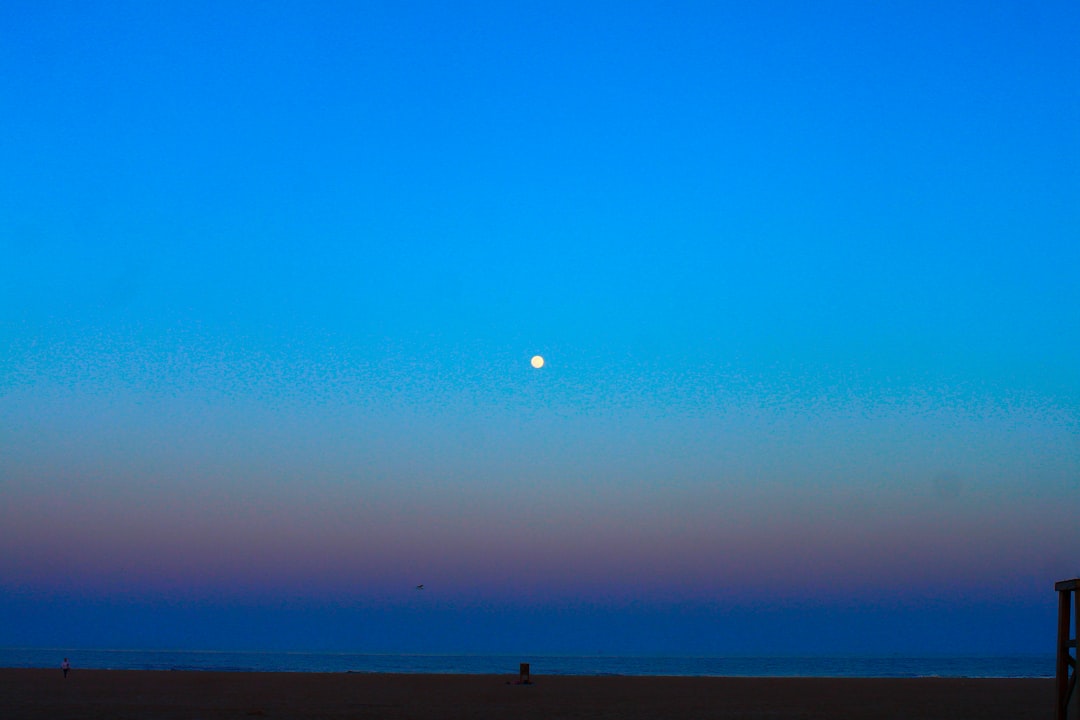
🚀 The Future of Online Lunar Education
Emerging technologies promise even more immersive and informative ways to learn about moon phases online. Virtual reality applications are beginning to let users experience the view from the moon’s surface or watch Earth-moon orbital mechanics from space.
Artificial intelligence integration could provide personalized learning paths based on your interests and knowledge level. Imagine an app that adapts its content delivery based on whether you’re a gardener, photographer, or astronomy student.
Crowdsourced observation platforms allow users worldwide to share moon photographs and observations, creating global databases of lunar phenomena. Your contribution from your location adds to collective understanding and creates opportunities to compare observations across latitudes and longitudes.
As space exploration expands, future apps might include real-time data from lunar satellites and eventually from moon-based observatories, providing perspectives literally impossible from Earth’s surface.
Learning about moon phases online opens a window to both ancient wisdom and cutting-edge science. Whether you’re tracking cycles for practical purposes, pursuing astronomical knowledge, or simply appreciating the beauty of our nearest celestial neighbor, digital tools have made lunar education more accessible than ever before. The moon that inspired our ancestors to create calendars, navigate oceans, and dream of spaceflight now sits in your pocket, ready to share its secrets through the tap of a screen. Start your journey today by downloading a quality lunar app and stepping outside to match the digital display with the real celestial object gracing your night sky. Your relationship with Earth’s companion begins with that first intentional observation and grows deeper with each passing phase.
