
Anúncios
Learning to play the accordion has never been easier thanks to modern mobile applications designed to guide beginners and experienced musicians alike through this beautiful instrument’s intricacies.
The accordion, with its rich cultural heritage spanning from European folk traditions to Latin American rhythms, has captivated music lovers for generations. Today’s technology brings this traditional instrument into the digital age, offering accessible learning tools right at your fingertips.
Whether you’re drawn to forró, tango, polka, or contemporary fusion styles, accordion learning apps provide structured lessons, interactive features, and immediate feedback that traditional learning methods simply cannot match. Let’s explore how these innovative applications can transform your musical journey. 🎵
Why Choose a Mobile App to Learn Accordion
Traditional accordion instruction often requires finding a qualified teacher, scheduling regular lessons, and committing to a fixed learning pace. Mobile applications revolutionize this approach by offering unprecedented flexibility and accessibility.
These digital learning platforms allow you to practice whenever inspiration strikes—whether during your morning commute, lunch break, or late-night practice sessions. The convenience factor alone makes apps an attractive option for busy individuals who struggle to maintain consistent lesson schedules.
Moreover, accordion learning apps typically cost a fraction of traditional lessons. While private instruction can run hundreds of dollars monthly, most quality apps offer comprehensive courses for minimal subscription fees or even free basic versions. This democratization of music education opens doors for aspiring musicians worldwide.
The immediate feedback mechanism built into these applications helps accelerate learning. You’ll know instantly whether you’re hitting the right notes, maintaining proper rhythm, or executing techniques correctly—something that might require waiting a full week between traditional lessons.


Essential Features to Look for in Accordion Apps 🎹
Not all accordion learning applications are created equal. Understanding which features matter most will help you select the right tool for your musical journey.
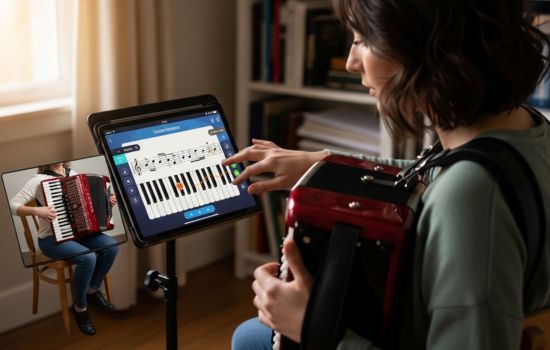
Quality apps should include visual representations of the accordion keyboard layout, showing you exactly where to place your fingers. This visual guidance proves invaluable, especially for beginners who haven’t yet developed muscle memory for the instrument’s unique button and key arrangements.
Interactive lessons that progress gradually from basic melodies to complex compositions ensure you build skills systematically. Look for apps offering structured curricula rather than random song collections that leave you guessing what to learn next.
Audio playback functionality allows you to hear how pieces should sound before attempting them yourself. Many advanced apps even offer adjustable playback speeds, letting you slow down challenging passages until you’ve mastered them.
Recording capabilities enable you to track your progress over time. Listening to recordings from weeks or months ago provides tangible evidence of improvement and motivation to continue practicing.
Virtual Accordion Simulation
Some applications include virtual accordion interfaces that let you play directly on your smartphone or tablet screen. While these can’t fully replicate the physical experience of bellows control and button resistance, they serve as excellent supplementary practice tools.
These simulations help you memorize note positions and practice finger patterns when your physical accordion isn’t available. They’re particularly useful for visualization exercises and mental practice between physical sessions.
Getting Started: Your First Steps with an Accordion App
Beginning your accordion journey with a mobile application requires a strategic approach to maximize learning effectiveness. Simply downloading an app and randomly tapping buttons won’t yield meaningful results.
Start by familiarizing yourself with the app’s interface and navigation. Spend time exploring different sections, understanding how lessons are organized, and identifying available resources. This orientation prevents frustration later when you’re trying to focus on learning music.
Most quality apps include introductory tutorials explaining accordion fundamentals—how the instrument produces sound, basic music theory concepts, and proper hand positioning. Don’t skip these foundational lessons, even if they seem elementary.
Set realistic practice goals based on your schedule and commitment level. Consistent fifteen-minute daily sessions typically produce better results than sporadic hour-long practices. The app’s progress tracking features can help you maintain accountability.

Building Your Accordion Technique Through Digital Learning
Developing proper technique from the beginning prevents bad habits that become increasingly difficult to correct over time. Accordion apps address this through demonstrations, visual guides, and corrective feedback.
Hand positioning represents one of the most crucial technical elements. Your right hand navigates the treble keyboard or buttons, while your left controls bass and chord buttons. Apps often use color-coding and animation to illustrate proper finger placement and movement patterns.
Bellows control, though impossible to practice on a virtual accordion, can be studied through instructional videos and explanatory content within comprehensive apps. Understanding airflow principles and dynamics helps you apply this knowledge when working with a physical instrument.
Rhythm and timing exercises featured in learning apps strengthen your internal metronome. Many include backing tracks and rhythm games that make timing practice engaging rather than tedious.
Finger Independence Exercises
Accordion playing demands considerable finger independence, particularly in your right hand. Quality apps include dedicated exercises targeting individual finger strength and coordination.
These drills might seem repetitive initially, but they build the dexterity necessary for executing complex musical passages smoothly. Progressive difficulty levels ensure exercises remain challenging as your skills improve.
Musical Styles You Can Master with Accordion Apps 🌍
The accordion’s versatility spans numerous musical genres, and comprehensive learning apps reflect this diversity by offering repertoire from various traditions.
Traditional European folk music forms the historical foundation of accordion playing. Apps typically include classic waltzes, polkas, and mazurkas that helped establish the instrument’s popularity across the continent.
Latin American styles like tango, forró, and vallenato showcase the accordion’s passionate, rhythmic capabilities. Learning these genres through apps often includes cultural context that enriches your understanding of the music’s emotional depth.
Contemporary applications also feature modern arrangements and fusion pieces, demonstrating the accordion’s relevance in today’s musical landscape. From rock adaptations to jazz improvisations, these selections appeal to players seeking fresh creative directions.
Classical transcriptions allow accordion students to explore timeless compositions originally written for piano, organ, or orchestral instruments. These pieces develop sophisticated technique while connecting you with music history’s greatest works.
Complementing App Learning with Physical Practice
While accordion apps provide exceptional educational resources, they work best as components of a comprehensive learning strategy that includes physical instrument practice.
Use your app sessions for theoretical study, song learning, and technique refinement. Then apply these lessons to your physical accordion, where you’ll engage with the instrument’s unique tactile and sonic qualities that no digital simulation can fully replicate.
The bellows mechanics, button resistance, and acoustic resonance of a real accordion provide essential feedback that informs your playing. Apps prepare you mentally and visually, but physical practice develops the muscle memory and listening skills that define accomplished playing.
Consider your app as an always-available practice partner and instructor. When your physical accordion isn’t accessible—during travel, at work, or in noise-sensitive environments—your mobile device keeps your learning momentum alive.
Creating an Effective Practice Routine
Structure your practice time to balance app-based learning with physical accordion work. A sample routine might include app-based warm-up exercises, technique drills on your physical instrument, song learning through the app, and concluding with applied practice on the accordion.
This integrated approach leverages each method’s strengths while minimizing their respective limitations. You’ll progress faster and develop more comprehensive musicianship than relying exclusively on either approach.
Tracking Progress and Staying Motivated 📈
Maintaining enthusiasm throughout your accordion learning journey requires visible progress markers and engagement strategies that quality apps provide through various features.
Progress tracking dashboards show metrics like practice time logged, lessons completed, and songs mastered. These quantifiable achievements provide motivation during plateaus when improvement feels less obvious.
Achievement systems with badges, levels, and milestones gamify the learning experience. While some purists dismiss these elements as gimmicks, research confirms that gamification increases engagement and practice consistency, particularly for adult learners balancing multiple responsibilities.
Recording features let you document your journey from first tentative notes through confident performances. Reviewing these recordings reveals subtle improvements you might otherwise overlook and provides powerful motivation to continue developing your skills.
Community features in some apps connect you with fellow learners worldwide. Sharing experiences, exchanging tips, and celebrating achievements together creates accountability and social motivation that individual practice often lacks.
Overcoming Common Challenges with App-Based Learning
Despite their numerous advantages, accordion learning apps present certain challenges that awareness and strategic approaches can help you navigate successfully.
Screen fatigue from extended device use can strain your eyes and reduce practice quality. Combat this by limiting continuous app sessions to reasonable durations and alternating between screen-based and physical practice.
The absence of personalized instructor feedback means you might reinforce incorrect techniques without realizing it. Periodically record yourself and compare your playing to app demonstrations, or consider occasional lessons with a qualified teacher who can identify and correct developing issues.
Motivation dips affect all self-directed learners. Combat these by varying your practice routine, exploring different musical styles within your app, joining online accordion communities, or setting performance goals like playing for friends or posting recordings online.
Technical limitations of touchscreen interfaces mean certain advanced techniques can’t be fully practiced digitally. Recognize apps as valuable tools within a broader learning ecosystem rather than complete substitutes for traditional methods.
Advanced Features for Progressing Musicians 🎼
As your skills develop beyond beginner level, seek apps offering advanced features that support continued growth and artistic exploration.
Chord libraries and progression tools help you understand harmonic relationships and develop arrangement skills. These resources prove particularly valuable for players interested in composition or improvisation.
Transpose functions allow you to practice songs in different keys, expanding your technical versatility and theoretical understanding. This capability proves essential for accompanists who need to adjust to different singers’ vocal ranges.
Backing track libraries provide professional-quality accompaniment for practice and performance. Playing along with rhythmic and harmonic support develops your sense of ensemble playing and prepares you for collaborating with other musicians.
Sheet music integration features display notation synchronized with audio playback, strengthening your sight-reading abilities while ensuring you’re interpreting written music correctly.
Choosing Between Free and Premium Accordion Apps
The accordion app marketplace offers both free and subscription-based options, each with distinct advantages suited to different learner needs and budgets.
Free apps typically provide basic functionality—simple song libraries, virtual accordion interfaces, and limited instructional content. These work well for casual exploration or determining whether accordion learning suits you before committing financially.
Premium subscriptions unlock comprehensive lesson curricula, extensive song libraries, advanced features like recording and transposition, and ad-free experiences. Serious learners generally find these investments worthwhile given the value compared to traditional instruction costs.
Some apps employ freemium models offering basic features free with optional paid upgrades. This approach lets you evaluate the app thoroughly before deciding whether premium features justify the cost for your specific learning goals.
Trial periods offered by many premium apps provide risk-free opportunities to explore advanced features. Take advantage of these trials to assess whether an app’s teaching methodology, interface design, and content library align with your learning preferences.
The Future of Digital Accordion Education 🚀
Technological advances continue reshaping how we learn musical instruments, with accordion education benefiting from innovations in artificial intelligence, augmented reality, and connected devices.
AI-powered listening technology emerging in music learning apps can analyze your playing in real-time, identifying pitch inaccuracies, rhythm issues, and technique problems with unprecedented precision. These systems provide immediate corrective feedback that accelerates skill development.
Augmented reality features could soon overlay visual guidance directly onto your physical accordion through smartphone cameras, showing exactly where to place fingers for upcoming notes or visualizing bellows movement patterns.
Connected accordion instruments with built-in sensors might sync with learning apps to track your playing with perfect accuracy, creating detailed analytics about your practice sessions and progress trends.
Social learning platforms integrating video chat enable remote ensemble playing and virtual accordion circles where musicians worldwide can practice together despite geographic separation.
Making the Most of Your Accordion Learning Journey
Success in learning accordion through mobile applications ultimately depends less on which specific app you choose and more on your consistency, practice quality, and realistic expectations.
Commit to regular practice sessions, even when motivation wanes. Brief daily practice consistently outperforms sporadic intensive sessions. Your chosen app’s reminder features can help establish this crucial habit.
Embrace mistakes as essential learning opportunities rather than failures. Every wrong note and timing error provides information about what needs additional attention. Quality apps normalize this process by creating safe practice environments where mistakes carry no consequences beyond learning value.
Supplement your app-based learning with complementary resources—YouTube accordion tutorials, online forums, accordion music recordings, and eventually live performances or workshops. This multifaceted approach develops well-rounded musicianship.
Set both short-term and long-term goals that give direction to your practice. Short-term objectives might include mastering a specific song or technique, while long-term goals could involve performing publicly or joining an accordion ensemble.
Most importantly, remember that learning accordion should ultimately bring joy. Choose music that excites you, celebrate small victories along the way, and let your passion for the instrument’s unique voice guide your journey through the wonderful world of accordion music. 🎶
