
Anúncios
Real-time voice translation apps are revolutionizing how we communicate across language barriers, making global conversations effortless and instant.
Imagine standing in a bustling Tokyo market, trying to negotiate prices with a vendor who speaks no English. Or picture yourself in a Paris café, wanting to chat with locals but feeling lost in translation. These scenarios once seemed daunting, but technology has transformed them into seamless experiences.
Voice translation applications have become essential tools for travelers, business professionals, students, and anyone seeking to break down linguistic walls. They harness artificial intelligence and machine learning to interpret spoken words and deliver instant translations, creating bridges between cultures in real-time.
🌍 Why Real-Time Voice Translation Matters Today
Our world has never been more connected, yet language remains one of the most significant barriers to genuine connection. With over 7,000 languages spoken globally, the ability to communicate instantly across these divides represents a monumental leap forward in human interaction.
Business meetings now span continents without requiring expensive interpreters. Travelers explore remote villages with confidence, knowing they can communicate basic needs and even engage in meaningful conversations. Students access educational content in foreign languages, expanding their learning horizons exponentially.
The technology behind these apps has evolved dramatically. Early translation tools offered clunky, often inaccurate results that caused more confusion than clarity. Modern applications leverage neural networks trained on billions of language samples, delivering nuanced translations that capture context, idioms, and cultural subtleties.


🔊 How Voice Translation Apps Actually Work
The magic behind real-time voice translation involves several sophisticated technological layers working in harmony. Understanding this process helps appreciate why some apps outperform others and what to expect from your chosen solution.
First, the app captures your voice through the device microphone. Advanced noise cancellation algorithms filter out background sounds, isolating your speech from ambient noise. This step proves crucial in crowded environments like airports or restaurants.
Next, speech recognition technology converts your spoken words into text. This involves analyzing sound waves, identifying phonemes, and assembling them into recognizable words within milliseconds. The system must account for accents, speech patterns, and pronunciation variations.
The text then passes through translation engines that consider grammatical structure, context, and semantic meaning. Modern systems don’t just swap words between languages—they understand sentence construction, implied meanings, and cultural references.
Finally, text-to-speech synthesis converts the translated text into natural-sounding audio in the target language. Advanced apps use native speaker recordings and AI-generated voices that mimic human intonation and emotion.
✨ Key Features to Look for in Translation Apps
Not all voice translation apps deliver the same quality or functionality. When selecting the right tool for your needs, certain features separate exceptional apps from mediocre ones.
Language Coverage and Accuracy
The number of supported languages matters, but accuracy matters more. Some apps boast support for 100+ languages yet deliver poor results in less common tongues. Premium apps prioritize quality over quantity, ensuring reliable translations across their supported language pairs.
Bidirectional translation capabilities allow seamless back-and-forth conversations. The app should handle both participants speaking their native languages without requiring manual switches or complicated settings.
Offline Functionality
Internet connectivity isn’t always guaranteed, especially when traveling internationally. The best translation apps offer downloadable language packs that work completely offline. This feature proves invaluable in remote areas, during flights, or when avoiding expensive roaming charges.
Offline modes typically require advance preparation—downloading specific language pairs before your trip. The trade-off involves larger app sizes and slightly reduced accuracy compared to cloud-based processing, but the independence from connectivity makes this worthwhile.

Conversation Mode and Interface Design
Intuitive design dramatically impacts user experience. Apps should facilitate natural conversations without forcing users to navigate complex menus or repeatedly tap buttons. Conversation mode automatically detects which language is being spoken and translates accordingly.
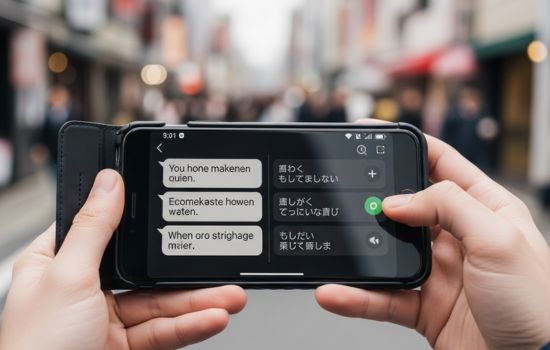
Visual clarity helps in noisy environments where hearing might prove difficult. Quality apps display both original and translated text prominently, allowing participants to read along if audio proves insufficient.
🎯 Practical Applications Across Different Scenarios
Understanding where and how to leverage voice translation technology maximizes its value. Different situations demand different approaches and features.
Travel and Tourism Adventures
Travelers benefit immensely from real-time translation when ordering food, asking directions, or booking accommodations. The technology transforms intimidating situations into manageable interactions, encouraging deeper cultural immersion.
Beyond basic transactions, translation apps enable authentic connections with locals. Imagine discussing history with a museum guide in Rome, learning cooking tips from a chef in Bangkok, or sharing stories with fellow passengers on a train through rural India.
Business and Professional Settings
International business increasingly relies on quick communication across languages. While professional interpreters remain essential for high-stakes negotiations, translation apps handle routine communications, video conferences with international teams, and quick clarifications during meetings.
Sales professionals use these tools to demonstrate products to foreign clients immediately. Customer service teams resolve inquiries from global customers without language barriers. The efficiency gains translate directly into improved business outcomes.
Educational Opportunities
Students learning new languages use translation apps as supplementary tools, checking pronunciation, practicing conversations, and building confidence. The instant feedback helps reinforce learning and correct mistakes in real-time.
Researchers accessing foreign language papers, international students attending lectures, and educators communicating with non-native speaking parents all find valuable applications for this technology in educational contexts.
🛡️ Privacy and Security Considerations
Voice translation apps process potentially sensitive conversations, raising legitimate privacy concerns. Understanding how apps handle your data protects you from unwanted exposure or misuse.
Reputable apps clearly outline their data policies. Some process translations entirely on-device, ensuring conversations never leave your phone. Others send audio to cloud servers for processing but promise immediate deletion after translation completion.
Be cautious with free apps that lack transparent privacy policies. Some monetize by collecting and selling user data, including conversation content. When discussing confidential business matters or personal information, choose apps with strong privacy commitments or offline capabilities.
Encryption during transmission protects conversations from interception. Look for apps that use end-to-end encryption when cloud processing becomes necessary. This ensures only you and your conversation partner can access the content.
📱 Comparing Top Voice Translation Applications
The market offers numerous options, each with unique strengths and weaknesses. Understanding these differences helps you select the ideal app for your specific needs.
| Feature | Professional Apps | Free Alternatives |
|---|---|---|
| Accuracy | High precision with context awareness | Variable, sometimes literal translations |
| Offline Mode | Comprehensive offline support | Limited or unavailable |
| Language Coverage | 50-100+ languages | 20-50 common languages |
| Privacy | Strong encryption and clear policies | Often unclear or data-mining models |
| Cost | Subscription or one-time purchase | Ad-supported or freemium |
💡 Tips for Maximizing Translation Accuracy
Even the best apps occasionally struggle with certain phrases or contexts. These practical strategies improve translation quality and reduce misunderstandings.
- Speak clearly and at moderate pace: Rushing or mumbling confuses speech recognition algorithms, leading to incorrect transcriptions and translations.
- Use simple sentence structures: Complex grammar with multiple clauses challenges translation engines. Breaking thoughts into shorter sentences improves accuracy.
- Avoid idioms and slang: Figurative language rarely translates directly. Stick to literal expressions when possible, especially for important information.
- Provide context when needed: If translating specialized terminology, brief explanations help the app choose appropriate translations.
- Verify critical information: For important details like addresses, prices, or medical information, ask the other person to confirm or write it down.
- Mind the environment: Quiet settings produce better results. In noisy locations, speak closer to the microphone and use headphones if possible.
🚀 The Future of Real-Time Voice Translation
Emerging technologies promise even more impressive capabilities in the coming years. Understanding these trends helps anticipate how translation tools will evolve and what new possibilities await.
Artificial intelligence continues advancing rapidly. Future apps will better understand context, emotion, and cultural nuances. They’ll recognize when a phrase requires literal versus figurative translation, adapting their output accordingly.
Augmented reality integration represents an exciting frontier. Imagine wearing glasses that display translated subtitles as people speak, or pointing your phone at street signs and seeing instant translations overlaid on your screen.
Emotional intelligence in translation will capture tone and sentiment, conveying not just words but the speaker’s feelings and intentions. This depth transforms translations from mechanical word swaps into genuine communication tools.
Dialect and accent recognition will improve dramatically. Apps will distinguish between regional variations of the same language, delivering more precise translations that account for local expressions and pronunciation patterns.
🌟 Overcoming Common Challenges
Despite remarkable capabilities, voice translation apps face inherent limitations. Recognizing these challenges sets realistic expectations and helps you work around potential issues.
Handling Homophones and Context
Words that sound identical but carry different meanings challenge even advanced systems. “I saw a bear” versus “I saw bare walls” requires contextual understanding that apps sometimes miss. Being aware of this limitation helps you rephrase when confusion arises.
Cultural Nuances and Politeness Levels
Languages encode politeness and social hierarchy differently. Japanese, Korean, and many other languages require choosing appropriate formality levels based on social context. Apps struggle with these subtleties, potentially producing overly casual or inappropriately formal translations.
When cultural sensitivity matters, acknowledge this limitation openly. Explain to conversation partners that you’re using translation technology and appreciate their patience with any awkward phrasing.
Technical Jargon and Specialized Vocabulary
Medical, legal, and technical terminology requires specialized knowledge. General-purpose translation apps often mishandle these terms. For professional contexts involving specialized vocabulary, consider apps designed specifically for your field or consult human experts.
🎓 Learning Languages with Translation Apps
While not replacements for comprehensive language education, translation apps serve as valuable supplementary learning tools. They offer immediate feedback and practical application opportunities that traditional methods can’t match.
Practice pronunciation by speaking phrases and comparing the app’s transcription with intended words. This immediate feedback loop helps identify and correct pronunciation errors quickly.
Build vocabulary by translating words you encounter throughout your day. The contextual learning sticks better than memorizing lists from textbooks.
However, avoid over-reliance. Apps can’t teach grammar rules, cultural contexts, or the deep understanding necessary for true fluency. Use them as supplements to formal learning, not substitutes.
🔧 Troubleshooting Common Issues
Even reliable apps occasionally malfunction or produce unexpected results. These troubleshooting tips resolve most common problems quickly.
If translations seem inaccurate, check your internet connection quality. Poor connectivity forces apps to use lower-quality processing or cached translations. Switching to offline mode might actually improve results in spotty coverage areas.
Microphone issues plague many users. Ensure the app has necessary permissions to access your microphone. Clean your device’s microphone opening, as dust and debris significantly impact audio capture quality.
App crashes or freezes often result from insufficient storage space or outdated software. Regularly update both the translation app and your device’s operating system. Clear cached data and restart your device when performance degrades.
🌐 Breaking Barriers, Building Connections
Real-time voice translation technology represents more than convenient communication—it embodies humanity’s desire to connect across differences. Each conversation between people who share no common language proves that technology can amplify our better instincts.
These apps won’t replace the rich experience of learning languages deeply. They can’t capture every poetic nuance or cultural reference. But they open doors previously closed to most people, democratizing cross-cultural communication in unprecedented ways.
Whether you’re traveling abroad, conducting international business, helping a non-native speaker in your community, or simply curious about other cultures, voice translation apps provide powerful capabilities literally at your fingertips. The technology continues improving, promising even more seamless communication in the future.
Embrace these tools as bridges between worlds. Use them to start conversations you’d otherwise miss, help strangers find their way, or simply share a laugh with someone across the language divide. In breaking down linguistic barriers, we discover our shared humanity waiting on the other side.
